

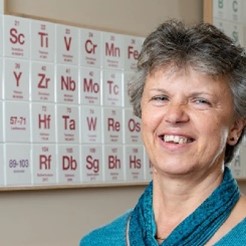
Pr. Gillian Reid (Univ. Southampton)
Gill was born and raised in Scotland and studied Chemistry at the University of Edinburgh, receiving a BSc (hons) in 1986 and a PhD investigating the synthesis, structures and electrochemical properties of transition metal macrocyclic complexes in 1989. In 1991, following a two-year post-doctoral position in Edinburgh, she was appointed to a lectureship in Inorganic Chemistry at the University of Southampton, becoming Professor in 2006. After a period as Director of Research, she served as Head of Chemistry at Southampton from 2016-2020 where she oversaw a major investment and refurbishment of the original chemistry building and teaching labs. She has published >360 papers and regularly presents her group’s work at national and international conferences. She became a Fellow of the Royal Society of Chemistry (FRSC) in 2012, served as an Elected Member of RSC Council (2011-15) and was elected to Fellow of the Royal Society of Edinburgh (FRSE) in 2022. She became President-Elect of the Royal Society of Chemistry (RSC) in July 2020, prior to taking up the role of RSC President from 2022-2024.
Research : The radioisotope 18F is widely used in medical imaging agents for positron emission tomography (PET) since it is easily produced via a cyclotron, has a short half-life (t1/2 = 109 min) and no radioproducts (18O is the decay product). Originally, the 18F was incorporated into organofluorine species, but more recent work has developed a range of non-C-F containing carrier molecules, including species with both metal and non-metal to fluorine bonds. Recent work in Gill’s group and in collaboration with GE Healthcare has developed complexes of both AlF3 and GaF3 based upon neutral and anionic macrocyclic N-donor ligands as carrier molecules.
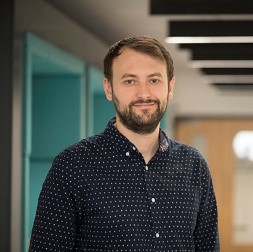
Dr Peter Harvey (Univ. Nottingham)
Pete completed an MChem (2009) and PhD (2013) at Durham University, with his doctoral studies focusing on the development of paramagnetic chemical shift (PARASHIFT) agents for new magnetic resonance imaging and spectroscopy (MRI/MRS) applications. Following his PhD, he was awarded an EPSRC Doctoral Prize Fellowship to move to The University of Manchester to work on biosensors based on the interaction between flavoeznymes and luminescent upconverting nanoparticles. In 2015, Pete was awarded a Wellcome Trust-MIT Postdoctoral Fellowship and moved to the Biological Engineering Department at the Massachusetts Institute of Technology. Here, he focused on tools for molecular functional MRI, including contrast agents capable of reporting on neurotransmitters and strategies to improve delivery of agents across the blood-brain barrier (BBB). He was then appointed as Research Fellow at the University of Nottingham in 2019, where he is currently Associate Professor.
Research :Pete is using his broad background experience to focus on neurodegenerative disease. He is approaching this challenging problem from a multi-angle approach; new imaging methods for improving sensitivity or specificity, novel contrast agents for targeted and/or functional imaging, and understanding and improving trans-BBB delivery in healthy and disease models. While primarily focused on imaging, some of the work also has significant overlap in therapeutic and theranostic applications.
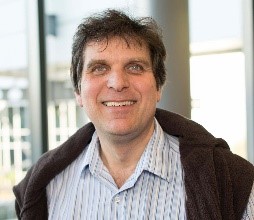
Pr Mark Bradley (Univ. Queen Mary London)
After gaining a First class Honours B. Sc. Degree in Chemistry with Distinction in Biochemistry, he carried out a D. Phil under the supervision of Professor Sir J. E. Baldwin FRS — both at the University of Oxford. On gaining both a Lindemann Trust and SERC/NATO Postdoctoral Fellowships, he continued with postdoctoral work under Professor C. T. Walsh at Harvard Medical School in Boston, USA (1989–1991) before moving to the University of Southampton as a Royal Society University Research Fellow. In 1997 he was awarded a Professorship in Combinatorial Chemistry at the Department of Chemistry, University of Southampton where he founded the Combinatorial Centre of Excellence. He continued to direct this centre until moving to Edinburgh in 2005. He recently joined the Precision Health University Research Institute at Queen Mary University London in 2023.
Research : His research is focussed on fluorescent/luminescent molecules, at the molecular or nanoscale levels, for various applications as in vitro cellular markers or in vivo probes.
